

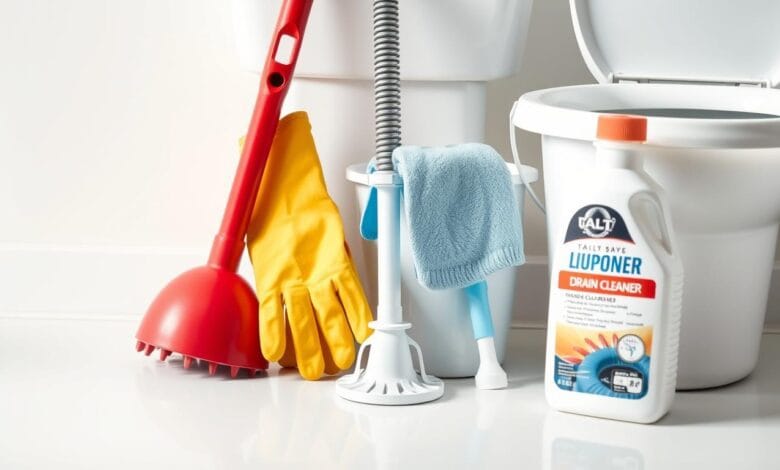
A clogged toilet can be a stressful and unpleasant experience. You’ve probably been there – you’re in a rush, and suddenly, the toilet won’t flush. It’s a common issue that can happen to anyone, anywhere.

Table of Contents
Knowing DIY toilet unclogging methods can save you time, money, and the hassle of calling a plumber. With a few simple tools and some household items, you can resolve the issue quickly. This guide will walk you through the steps to unclog your toilet, covering various methods to suit your needs.
By the end of this guide, you’ll be equipped with the knowledge to tackle the problem confidently. Whether you’re dealing with a minor clog or a more stubborn blockage, we’ll provide you with effective solutions to get your toilet functioning properly again.
Understanding Toilet Clogs and When to Take Action
To fix a clogged toilet, you need to know what causes it. Clogs are common in homes. Knowing the causes and signs helps you act fast to clear the blockage and avoid future problems.
Common Causes of Toilet Clogs
Toilet clogs come from several factors. Knowing these is key for effective toilet clog removal.
Too Much Toilet Paper
Using too much toilet paper can cause clogs. The paper may not break down fast or pile up in the pipes.
Non-Flushable Items
Flushable items like sanitary products, wet wipes, and hair can block the toilet.
Hard Water Buildup
Minerals from hard water can build up over time. This can narrow the pipes and cause clogs.
Signs Your Toilet Needs Unclogging
Knowing when your toilet is clogged helps you act fast. Here are signs your toilet needs attention:
- Slow Draining Water: If water drains slowly after flushing, it might be clogged.
- Rising Water Level: If the water level goes up instead of down after flushing, there’s a blockage.
- Gurgling Sounds: Gurgling sounds from the toilet mean there’s a clog or blockage in the pipes.
By knowing these causes and signs, you can take steps to clear toilet blockages. This keeps your toilet working well.
Essential Tools and Supplies for Unclogging a Toilet
Unclogging a toilet needs the right tools for a smooth fix. The right equipment helps solve the problem quickly and effectively.
Must-Have Tools for Toilet Unclogging
You’ll need pliers, toilet augers, and protective gear to unclog a toilet. These tools are key for a successful fix.
Types of Plungers and Their Uses
A plunger is the basic tool for unclogging. There are standard and flange plungers. The standard plunger works for most clogs. The flange plunger is better for tough clogs. Proper plunger technique means a tight seal and steady pressure.
Toilet Augers and Snakes
For tough clogs, use a toilet auger or snake. These tools reach deep into the drain to break up clogs. Toilet augers are great for clogs down the drain line.
Protective Gear and Cleanup Supplies
Protect yourself from messes and bacteria when unclogging. Wear rubber gloves and a face mask. Keep old towels or rags for spills.

Household Alternatives When You Don’t Have a Plunger
Don’t worry if you don’t have a plunger. There are household items to unclog a toilet.
Dish Soap and Hot Water
Use dish soap and hot water to unclog. Pouring soap into the bowl, then hot water, can break down the clog.
Baking Soda and Vinegar
The baking soda and vinegar method is another option. It’s a natural solution that won’t harm your toilet.
Wire Hangers and Other Makeshift Tools
In a tight spot, a wire hanger or other tools can help. But be careful not to scratch the bowl.
How to Unclog a Toilet: Step-by-Step Methods
A clogged toilet is more than just a hassle; it’s a problem that needs fixing. Luckily, with the right tools and techniques, you can solve it quickly.
Preparation Steps Before Unclogging
Before you start, make sure your toilet and area are ready.
Shutting Off the Water Supply
First, find the shut-off valve behind the toilet. Turn it clockwise to stop the water flow. This step is key to prevent more water from entering the bowl.
Protecting Your Floor and Yourself
Next, cover your floor with old towels or a plastic sheet to avoid spills. Wear rubber gloves to keep your hands safe from germs and other harmful stuff.
The Plunger Method: Proper Technique
Using a plunger is often the simplest way to unclog a toilet.
Creating a Proper Seal
Make sure the plunger fits tightly over the clogged drain. This tight seal is essential for effective plunging.
Effective Plunging Motions
Slowly push down and then pull up sharply on the plunger handle. Do this several times to create suction that can clear the clog.
Testing the Drain After Plunging
After plunging, flush the toilet to see if the water drains well. If it doesn’t, you might need to plunge again or try another method.
Hot Water and Dish Soap Method
If plunging doesn’t work, try hot water and dish soap. Pour a lot of dish soap into the bowl, then add hot water. Let it sit for a few minutes before flushing.
Baking Soda and Vinegar Solution
Another good method is baking soda and vinegar. Pour 1 cup of baking soda into the bowl, then 1 cup of vinegar. Let it sit for a bit before flushing.
Using a Toilet Auger or Snake
For tough clogs, a toilet auger or snake works well.
Proper Insertion Technique
Insert the auger into the toilet drain carefully and rotate it as you push it deeper into the pipe.
Working Through the Clog
When you hit resistance, you’ve found the clog. Keep applying gentle pressure and rotating the auger to break through the blockage.
| Method | Effectiveness | Ease of Use |
|---|---|---|
| Plunger | High | Easy |
| Hot Water and Dish Soap | Medium | Easy |
| Baking Soda and Vinegar | Medium | Moderate |
| Toilet Auger/Snake | High | Moderate |
Tackling Stubborn Clogs and Preventing Future Problems
Stubborn clogs in your toilet can really mess up your day. But, with the right methods, you can fix these problems. Keeping your toilet working well is key to a comfy home. Knowing how to handle clogs is a must for homeowners.
Dealing with Non-Flushable Items
Flushing things you shouldn’t can cause big clogs. Items like wet wipes, sanitary products, and too much toilet paper can block your toilet. To stop this, think twice before flushing. Always throw away non-flushable items in the trash to keep your toilet clear.
When to Use Chemical Drain Cleaners
Chemical drain cleaners can clear clogs, but use them carefully. Always follow the instructions and be safe to avoid pipe damage or injury. Use these cleaners only when other methods don’t work.
Preventing Overflow and Water Damage
Stopping overflow is key to avoid water damage. If your toilet is clogged, turn off the water supply to stop more problems. Knowing how to manage the water supply can save you from mess and expensive fixes.
Maintenance Tips to Prevent Future Clogs
Regular upkeep is the best way to avoid clogs. Be careful about what you flush and clean your toilet often. Regular cleaning keeps your toilet clean and helps spot problems early.
What Not to Flush
Knowing what not to flush is important. Don’t flush:
- Wet wipes
- Sanitary products
- Too much toilet paper
- Dental floss
- Cotton swabs
Regular Cleaning Practices
Cleaning your toilet often is vital. This means:
- Cleaning the bowl regularly
- Checking for mineral deposits
- Ensuring the toilet is properly aligned
Just like taking care of a luxury yacht or travel trailer, your toilet needs regular upkeep. By following these tips, you can cut down clog chances and keep your toilet working well.
Conclusion
Now you know how to unclog a toilet. You’re ready to face this common problem head-on. Knowing the causes and having the right tools makes fixing it easy.
Learning to remove toilet clogs saves you time and money. It also avoids the mess of an overflow. Using a plunger, hot water, or a toilet auger shows you’re ready for plumbing challenges.
By following this guide, you’ll fix the problem and learn to prevent it. Regular care and being careful about what you flush helps keep your toilet working well.
FAQ
What is the best way to unclog a toilet?
The best method to unclog a toilet is using a plunger. It’s often the most effective and easiest way. If the plunger doesn’t work, try a toilet auger or snake. You can also use hot water and dish soap or baking soda and vinegar.
How do I know if my toilet is clogged?
If the water level in your toilet bowl is higher than usual, it might be clogged. Also, if the water doesn’t drain or drains slowly after flushing, it’s a sign. Hearing gurgling sounds from the toilet is another indication.
Can I use chemical drain cleaners to unclog my toilet?
Chemical drain cleaners can work, but use them with caution. They can damage your toilet or pipes and pose health risks. Try other methods first, like a plunger or toilet auger.
How can I prevent toilet clogs?
To avoid clogs, be careful what you flush. Don’t flush non-flushable items like sanitary products, wet wipes, or too much toilet paper. Regular maintenance, like checking for mineral buildup or using a toilet cleaner, can also help.
What household items can I use to unclog a toilet?
You can use hot water and dish soap or baking soda and vinegar to unclog a toilet. These methods are often safer than chemical drain cleaners.
How do I use a toilet auger or snake?
To use a toilet auger or snake, feed the cable into the toilet drain. Rotate it as you push it further into the pipe to break up or retrieve the clog. Follow the manufacturer’s instructions and take precautions to avoid damaging your toilet.
Can I unclog a toilet with a plunger if it’s overflowing?
If your toilet is overflowing, stop the water flow first. Turn off the water supply to the toilet or use a bucket to remove water. Then, use the plunger carefully to avoid splashing.