
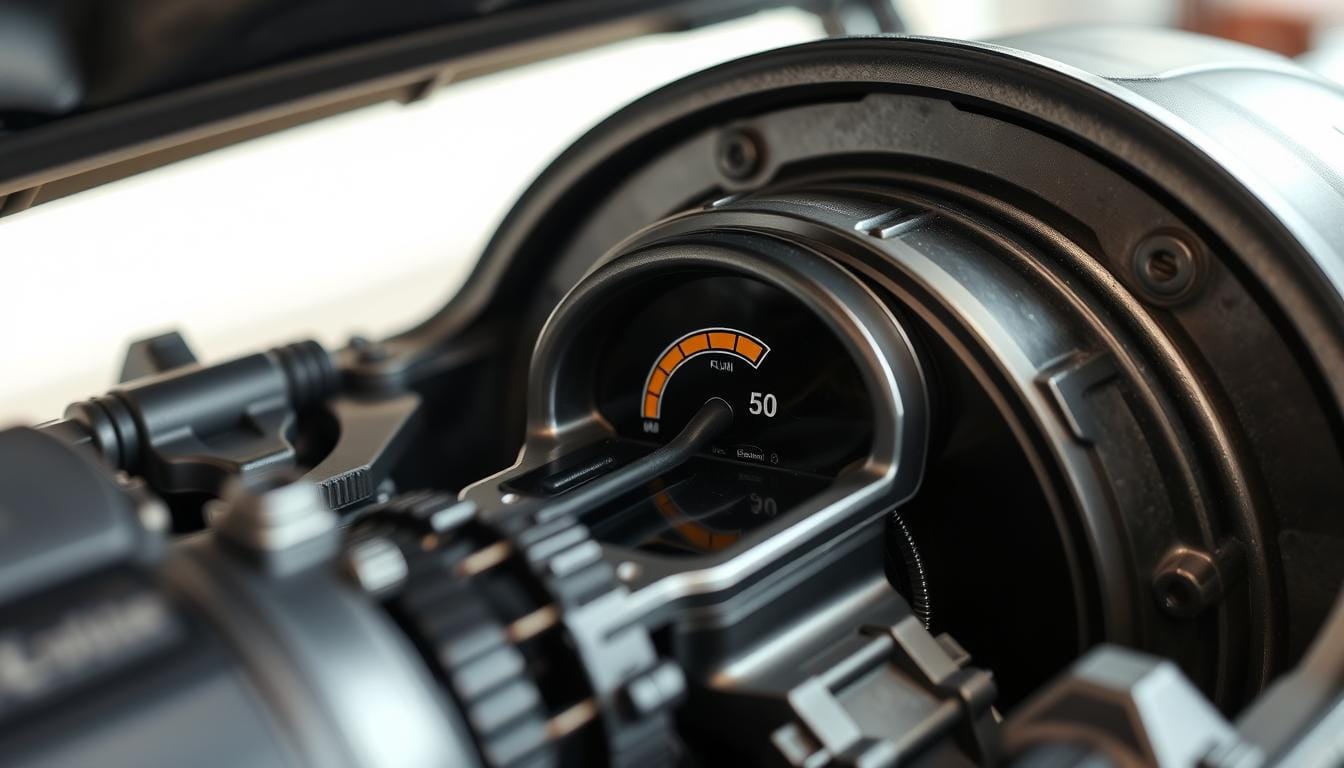
how to check transmission fluid
As a car owner, you know how important regular maintenance is. Checking your transmission fluid is a key part of this. If you ignore it, you might face expensive repairs or even a broken transmission.
Transmission fluid helps keep your car’s transmission running smoothly. It also helps control temperature and makes gear shifts easier. Regular checks can spot problems early on.

Table of Contents
With a simple guide, you can keep your transmission in top shape. This article will show you how to check your transmission fluid. We’ll also share transmission fluid maintenance tips to keep your car in great condition.
Understanding Transmission Fluid and Its Importance
Transmission fluid is key to your car’s smooth running. It keeps the transmission working well and lasts longer. It does many important jobs.
What Transmission Fluid Does
Transmission fluid lubricates the moving parts in the transmission. This reduces friction and stops wear. It also cools the transmission, helping to get rid of heat from friction and stress.
Also, it transfers power in automatic transmissions. This makes gear shifts smooth.
Signs of Low or Degraded Transmission Fluid
Low or old transmission fluid can cause big problems. Look out for slipping or hesitation when shifting gears. Also, unusual noises like grinding or whining are bad signs.
Burning smells from the transmission are another warning. And watch for leakage. It can lower the fluid level.
| Signs | Description |
|---|---|
| Slipping or Hesitation | Delays or slips during gear shifts, indicating low fluid level or degraded fluid. |
| Unusual Noises | Grinding or whining noises due to lack of lubrication or degraded fluid. |
| Burning Smells | Overheating transmission causing burning smells, potentially due to degraded fluid. |
When to Check Your Transmission Fluid
Knowing when to check your transmission fluid can prevent expensive repairs. Regular checks can spot problems early, before they get worse.
Recommended Checking Intervals
Most car makers suggest checking the transmission fluid every 30,000 to 60,000 miles. But, this can change based on your car’s type, model, and age. Always check your car’s manual for the best time to check it. Regular checks keep your transmission healthy.
Warning Signs That Prompt Immediate Checking
If your car slips or hesitates between gears, check the transmission fluid right away. Also, watch out for unusual noises or a burning smell. Catching these signs early can help fix the problem and avoid more damage.
Tools and Preparations Needed
To check your transmission fluid, start by gathering the right tools. You need the necessary equipment and to know about safety precautions.
Basic Tools Required
You’ll need a few basic tools to check your transmission fluid. These include your vehicle’s owner’s manual, a lint-free cloth or paper towel, and the transmission dipstick. Make sure you have these tools ready to make the process easier.
Safety Precautions
When checking your transmission fluid, safety is key. Ray Bohomoly, a renowned automotive expert, said, “Safety is not just a precaution, it’s a practice.” Park your vehicle on a level surface and apply the parking brake. Be careful of the engine and transmission components, as they can be hot. Always check your owner’s manual for specific safety tips.
How to Check Transmission Fluid Step-by-Step
Checking your car’s transmission fluid is key to keeping it running well. It helps your car’s transmission last longer. By following a few steps, you can keep your car in top shape and avoid problems.
Preparing Your Vehicle
First, park your car on a flat surface. This is important because the fluid level can be off if the car is not level. Engage the parking brake and let the engine warm up. It’s best to check the fluid when the engine is running smoothly and has warmed up.
Locating the Transmission Dipstick
The transmission dipstick is usually marked and found at the back of the engine or on the driver’s side. If you can’t find it, check your car’s manual. When you find it, pull it out and clean it with a cloth or paper towel. This ensures an accurate reading.
Proper Engine Conditions for Checking
The engine should be running and warm for a correct reading. Some cars need to be in park or neutral. Check your manual for the right way to do it. This is important for getting a true reading of the fluid level.
Reading the Dipstick Correctly
After putting the dipstick back in and pulling it out again, you’ll get a true reading. The dipstick will show the minimum and maximum levels. Make sure the fluid level is between these marks. Also, check the fluid’s color and texture. Make a note of the level and condition for future checks.
- Ensure the level is between the minimum and maximum marks.
- Check the fluid’s color; it should be pink or red. Dark or black fluid may indicate degradation.
- Note any unusual odors or textures, as these can be signs of issues.
By following these steps, you can keep your car’s transmission fluid at the right level. This helps your car’s transmission stay healthy and last longer.
Evaluating Transmission Fluid Condition
The state of your transmission fluid tells a lot about your car’s health. Checking the fluid’s condition is key to keeping your car running well and lasting long.
Understanding Fluid Color and What It Means
The color of your transmission fluid shows its health. Fresh transmission fluid is a bright red color. As it gets older, it darkens from heat and dirt. Here’s what different colors mean:
| Fluid Color | Condition |
|---|---|
| Bright Red | New or good condition |
| Dark Red or Brown | Aging or contaminated |
| Black or Thick | Degraded, potentially burnt |
Make sure to check the fluid color against the dipstick or a white paper towel for an accurate reading.
Identifying Concerning Smells and Textures
Smell and texture of the transmission fluid also show its condition. A burnt smell means the fluid has broken down from too much heat. It should feel smooth; if it’s gritty or has particles, it’s likely dirty.
Checking your transmission fluid regularly can spot problems early. This keeps your car’s transmission running smoothly.
Special Cases and Troubleshooting
Not all cars are the same when it comes to transmission fluid. Some need extra care, like manual and sealed transmissions. These types can be tricky to check and maintain.
Checking Fluid in Manual Transmissions
Manual transmissions have their own rules for fluid checks. It’s important to look at your car’s manual for the right steps. Some might not have a dipstick, so you’ll need to find another way to check the fluid.
Modern Vehicles with Sealed Transmissions
Many new cars have sealed transmissions. This makes it hard to check the fluid. Some are meant to never need fluid changes. But, if you think there’s a problem, a mechanic might be needed. They can help since getting to the fluid is tough.

Adding Transmission Fluid When Low
If your fluid level is low, adding the right type is key. The wrong fluid can harm your transmission. Always check your manual for the correct fluid. Add it slowly and check often to avoid overfilling.
Key Takeaway: Always consult your vehicle’s manual for specific guidance on checking and maintaining transmission fluid, even for manual and sealed transmissions.
Conclusion: Maintaining Healthy Transmission Fluid
Checking your transmission fluid regularly is key to your car’s transmission lasting longer. By following the steps in this article, you can keep your transmission fluid at the right level and quality.
It’s important to check the fluid level often using the dipstick. This simple step can spot problems early, avoiding bigger issues later.
When you check the fluid, always look at your car’s manual for the right times and how to do it. This keeps your transmission running well and saves you from expensive repairs.
Being proactive with your transmission fluid helps your car run smoothly. It also makes your transmission last longer.
FAQ
How often should I check my transmission fluid?
Check your transmission fluid every 30,000 to 60,000 miles. Or follow your vehicle’s owner’s manual. This helps catch problems early.
What are the signs that my transmission fluid needs to be checked?
Look out for slipping or hesitation in gears, unusual noises, or a burning smell. These signs mean it’s time to check your transmission fluid.
How do I know if my transmission fluid is at the correct level?
Check your owner’s manual for how to check the fluid level. You’ll need to find the transmission dipstick and see if the level is right.
What does the color of my transmission fluid indicate?
Healthy fluid is light brown or pinkish. Dark or black means it’s degraded or contaminated. A milky look suggests coolant leakage.
Can I check transmission fluid in a manual transmission vehicle?
Yes, you can check it in a manual transmission. But, the steps might differ. Always check your owner’s manual for specific instructions.
What if my vehicle has a sealed transmission?
If your vehicle has a sealed transmission, you can’t use a dipstick. Look in your owner’s manual or talk to a mechanic for advice.
How do I add transmission fluid to my vehicle?
First, make sure you’re using the right fluid, as your manual says. Then, find the reservoir and add fluid slowly. This prevents overfilling.
What are the consequences of neglecting transmission fluid maintenance?
Ignoring fluid maintenance can damage your transmission. It may wear out early or fail. Regular checks and maintenance prevent these problems and keep your transmission running well.